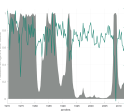
This column reports the nature and the amplitude of economic cycles in the Euro area since 1970, with a focus on the role of financial factors in generating these cycles.
Back in 2010, the Eurozone countries insisted a lot that the IMF provides exceptional financing to Greece. They will be duly reminded when the reckoning moment has come.
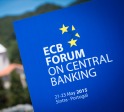
From May 21 to May 23, the ECB organized its 2nd annual forum on Central banking. Mario Draghi's inaugural speech, as well as discussions on May 23rd, focused mainly on the need for structural reforms to strengthen growth in Europe.
While European external surpluses are accumulating and domestic demand is slacking, insisting on improving the Union’s external competitiveness, as some in the Commission are presently doing, is paradoxical. For Europe, the paramount risk is not losing its competitiveness. It is not recovering cohesion and growth.
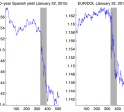
The ECB has announced that it will launch in March its first round of quantitative easing. The announcement contains some good and bad surprises: the size of the ECB's plan is gigantic, while the Central Bank was unclear about the Greek issue. How was this announcement perceived by markets?
Post, January 9, 2015 By Urszula Szczerbowicz, Natacha Valla
Instead of buying sovereign debt, the ECB could broaden further its purchases to include equity of all sorts. Fuelling an equity bubble is no worse than fuelling a bond one. It can be mitigated by intervening secretly and including non listed securities. Inhibitions to take risk should be lifted.
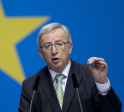
The long awaited Juncker Plan for investment in Europe has arrived a few weeks ago. Beyond the creation of a Strategic Fund, the Plan as a whole has disappointed: not adamant enough to eliminate the deep obstacles to cross-border investment, and opaque in generating the “List” of projects to be financed. Yet, even imperfectly, Europe has now done its homework.
The ECB has confirmed its determination to counter the risk of deflation in the eurozone by evoking the possibility of sovereign bond purchases, but is confronted once again with the heterogeneity of the area. The need for compromise could jeopardize the effectiveness of its action.
European policymakers are currently busy addressing two issues: moribund investment and banks on extended sick leave. Some observers might be tempted to segregate these issues. While investment would be in the remit of States, the financial health of our economies would be under the responsibility of the ECB alone.
Some five years after the severe recession of 2009, private sector investment in Europe is still dangerously sluggish. And public investment has been cut further, reinforcing a long term downward trend. At a mere 2% of GDP, it has halved over thirty years.